Learn how USDT transactions work, how to verify transfers using blockchain explorers, understand wallet security, transaction confirmations, and avoid common cryptocurrency scams in this complete 2026 beginner’s guide.
Table of Contents
- Why Wallet Security Matters
- Protecting Your Recovery Phrase
- Public Keys vs. Private Keys
- Recognizing Common Cryptocurrency Scams
- Understanding Online Claims About “Flash USDT Tools”
- How to Verify Legitimate USDT Transactions
- Business Verification Best Practices
- Security Checklist
- Case Studies
- Key Takeaways
Why Wallet Security Matters
A blockchain network is designed to secure transaction records through cryptography and distributed consensus. However, even the most secure blockchain cannot protect users who unintentionally expose their own credentials.
For most cryptocurrency users, the greatest risks are not flaws in the blockchain itself—they are phishing, malware, social engineering, and mistakes such as sharing recovery phrases or sending funds to the wrong address.
Developing good wallet security habits is therefore one of the most important steps in using USDT safely.
Protecting Your Recovery Phrase
When you create a self-custody wallet, it usually generates a recovery phrase (also called a seed phrase). This sequence of words allows you to restore access to your wallet if your device is lost or replaced.
Treat your recovery phrase like the master key to a vault.
Best Practices
- Write it down and store it in a secure offline location.
- Consider keeping secure backups in separate locations.
- Never share it with anyone claiming to offer support.
- Avoid storing it in screenshots or unsecured cloud storage.
- Periodically confirm that your backup remains readable.
Anyone with access to your recovery phrase may be able to control the assets associated with your wallet.
Public Keys vs. Private Keys
Understanding the difference between public and private information is essential.
| Public Address | Private Key / Recovery Phrase |
|---|---|
| Used to receive cryptocurrency | Used to authorize transactions |
| Safe to share | Must remain secret |
| Visible on the blockchain | Never published on the blockchain |
| Similar to an account number | Similar to the key that unlocks the account |
If someone asks for your private key or recovery phrase, treat that as a serious warning sign.
Recognizing Common Cryptocurrency Scams
The cryptocurrency ecosystem has created many legitimate opportunities, but it has also attracted scams. Knowing the most common tactics can help you avoid becoming a victim.
1. Fake Support Requests
Scammers may pretend to represent an exchange or wallet provider and ask for your recovery phrase.
Legitimate support staff will not need your recovery phrase to assist you.
2. Impersonation
Fraudsters may copy the names, logos, or branding of legitimate organizations.
Before downloading software or following instructions, confirm that you are interacting with the organization’s official website or communication channels.
3. Phishing Websites
A phishing site often looks almost identical to a real service but is designed to steal login credentials or wallet information.
Always check the website address carefully before entering sensitive information.
4. Fake Giveaways
A common tactic is promising that if you send cryptocurrency to an address, you’ll receive more in return.
Legitimate organizations rarely conduct promotions that require you to send cryptocurrency first.
5. Pressure and Urgency
Scammers often encourage immediate action by claiming that an opportunity is about to expire.
Take time to verify information before transferring funds or sharing credentials.
Understanding Online Claims About “Flash USDT Tools“
You may encounter websites, videos, or advertisements referring to so-called “Flash USDT Tools.”
It is important to understand the context in which these claims appear.
Public blockchains record ownership through cryptographic signatures, network validation, and consensus. Genuine USDT balances are reflected on the blockchain ledger and can be independently verified using blockchain explorers.
Claims that software can create genuine, spendable USDT outside of those normal blockchain processes are inconsistent with how public blockchain networks operate.
When evaluating online content:
- Ask whether the claimed transaction can be verified on the blockchain.
- Look for a valid transaction hash (TXID).
- Confirm the transaction using an appropriate blockchain explorer.
- Be cautious of extraordinary promises that lack independent verification.
Understanding these principles helps distinguish technical facts from unsupported marketing claims.
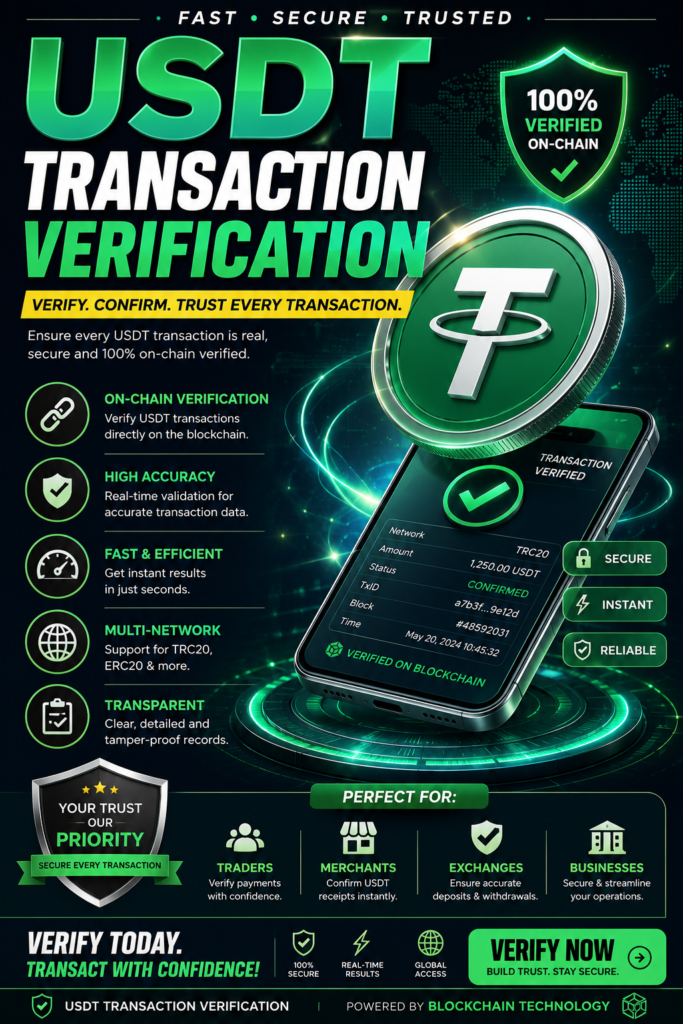
How to Verify Legitimate USDT Transactions
One of the strengths of blockchain technology is transparency. Anyone can independently verify a transaction recorded on a public blockchain.
Step 1: Obtain the Transaction Hash
A transaction hash (TXID) is a unique identifier for a blockchain transaction.
Step 2: Identify the Network
Determine whether the transaction was sent on TRON, Ethereum, BNB Smart Chain, or another supported network.
Step 3: Use the Appropriate Blockchain Explorer
Search for the TXID on the explorer that corresponds to the network used.
Step 4: Verify the Details
Check that the following information matches the expected transaction:
- Sender address
- Recipient address
- Amount
- Timestamp
- Confirmation status
- Network
If the information is present and consistent, you have independent confirmation from the blockchain itself.
Business Verification Best Practices
Businesses that accept USDT often establish procedures to reduce operational risk.
Typical practices include:
- Verifying every incoming transaction using the blockchain.
- Waiting for an appropriate number of confirmations before recognizing payment.
- Recording the TXID for accounting and audit purposes.
- Confirming that the payment was received on the correct network.
- Training staff to recognize phishing attempts and social engineering.
These practices help improve consistency and reduce the likelihood of mistakes.
Security Checklist
Before sending or accepting cryptocurrency, review this checklist.
| Task | Status |
|---|---|
| Verify recipient address | ✔ |
| Confirm blockchain network | ✔ |
| Review transfer amount | ✔ |
| Save the transaction hash | ✔ |
| Wait for confirmations | ✔ |
| Protect the recovery phrase | ✔ |
| Enable two-factor authentication where available | ✔ |
| Use official wallet software | ✔ |
Following these steps helps reduce many common operational risks.
Case Study 1: Cross-Border Freelance Payment
A freelance designer in Brazil completes a project for a client in Germany.
The client sends payment in USDT over the agreed blockchain network.
Before marking the invoice as paid, the designer:
- Receives the TXID.
- Looks up the transaction using the appropriate blockchain explorer.
- Confirms the sender address, recipient address, amount, and confirmation status.
- Records the TXID with the invoice.
This process provides an objective record of the payment.
Case Study 2: Merchant Payment Verification
An online retailer accepts USDT as one payment option.
Instead of relying solely on a customer’s screenshot, the retailer’s payment system:
- Checks the blockchain for the transaction.
- Verifies that the amount matches the order.
- Waits for the required confirmations.
- Updates the order status after verification.
Using blockchain data directly improves reliability and reduces the risk of errors.
Building Good Habits
Developing consistent habits is one of the best ways to use cryptocurrency responsibly.
Remember to:
- Learn how your chosen blockchain network works.
- Verify transactions using blockchain explorers.
- Keep software updated.
- Protect your recovery phrase.
- Double-check addresses before sending funds.
- Take time to investigate unexpected requests.
These practices remain valuable whether you are sending a small personal payment or managing larger business transactions.
Key Takeaways
By this point in the guide, you should understand that:
- Wallet security begins with protecting your private keys and recovery phrase.
- Public blockchain data allows anyone to verify legitimate transactions independently.
- Transaction hashes (TXIDs) provide an objective way to confirm transfers.
- Businesses and individuals benefit from verifying payments directly on the blockchain rather than relying on screenshots.
- Claims about unofficial “Flash USDT Tools” should be evaluated against how public blockchains actually function. Legitimate USDT ownership is determined by blockchain records, not by software displays or unverified assertions.
- Strong security habits and independent verification are among the best defenses against cryptocurrency scams.
Understanding About “Flash USDT Tool“
If you’ve spent time researching cryptocurrency online, you may have encountered advertisements or social media posts referring to a “Flash USDT Tool.” The phrase often appears alongside claims that software can generate temporary USDT balances, create spendable tokens outside normal blockchain rules, or bypass transaction verification.
These claims should be approached with extreme caution.
Public blockchains such as TRON and Ethereum do not allow software to create legitimate, spendable USDT outside the network’s consensus rules. Every genuine USDT transaction must be cryptographically signed by the sender, validated by the blockchain network, and permanently recorded on the public ledger. Wallet applications display information that already exists on the blockchain—they do not create valid token balances on their own.
When websites or videos advertise a “Flash USDT Tool” with promises that contradict these principles, the claims are inconsistent with how public blockchains function. In many cases, these promotions are associated with scams designed to collect payments, steal wallet credentials, or convince victims that funds have been transferred when no valid blockchain transaction exists.
Before accepting any cryptocurrency payment, verify it independently:
- Request the transaction hash (TXID).
- Check the transaction on the appropriate blockchain explorer.
- Confirm the sender, recipient, amount, network, and confirmation status.
- Wait for the required confirmations before treating the payment as complete.
If a claimed transfer cannot be verified on the blockchain, it should not be treated as a legitimate USDT transaction.
Warning Signs
Be cautious if you encounter claims such as:
- Software that can generate spendable USDT without blockchain validation.
- Guaranteed cryptocurrency profits with little or no risk.
- Requests for your recovery phrase or private key.
- Pressure to act immediately before “an opportunity expires.”
- Screenshots presented as the only proof of payment instead of a verifiable transaction hash.
Understanding how blockchain verification works is one of the best defenses against cryptocurrency fraud. The transparency of public blockchains allows users to verify transactions independently rather than relying on marketing claims or unverified demonstrations.

